
Assistance with Home and Living in Melbourne – How to Get Quick Support
The National Disability Insurance Scheme (NDIS) provides essential support and funding to help individuals with disabilities lead more independent lives. One of the key areas where NDIS support is crucial is home and living support options for people with disabilities. NDIS home and living support options are designed to assist individuals with disabilities to live comfortably and independently in their own homes or chosen accommodations.
Types of NDIS Home and Living Support Options
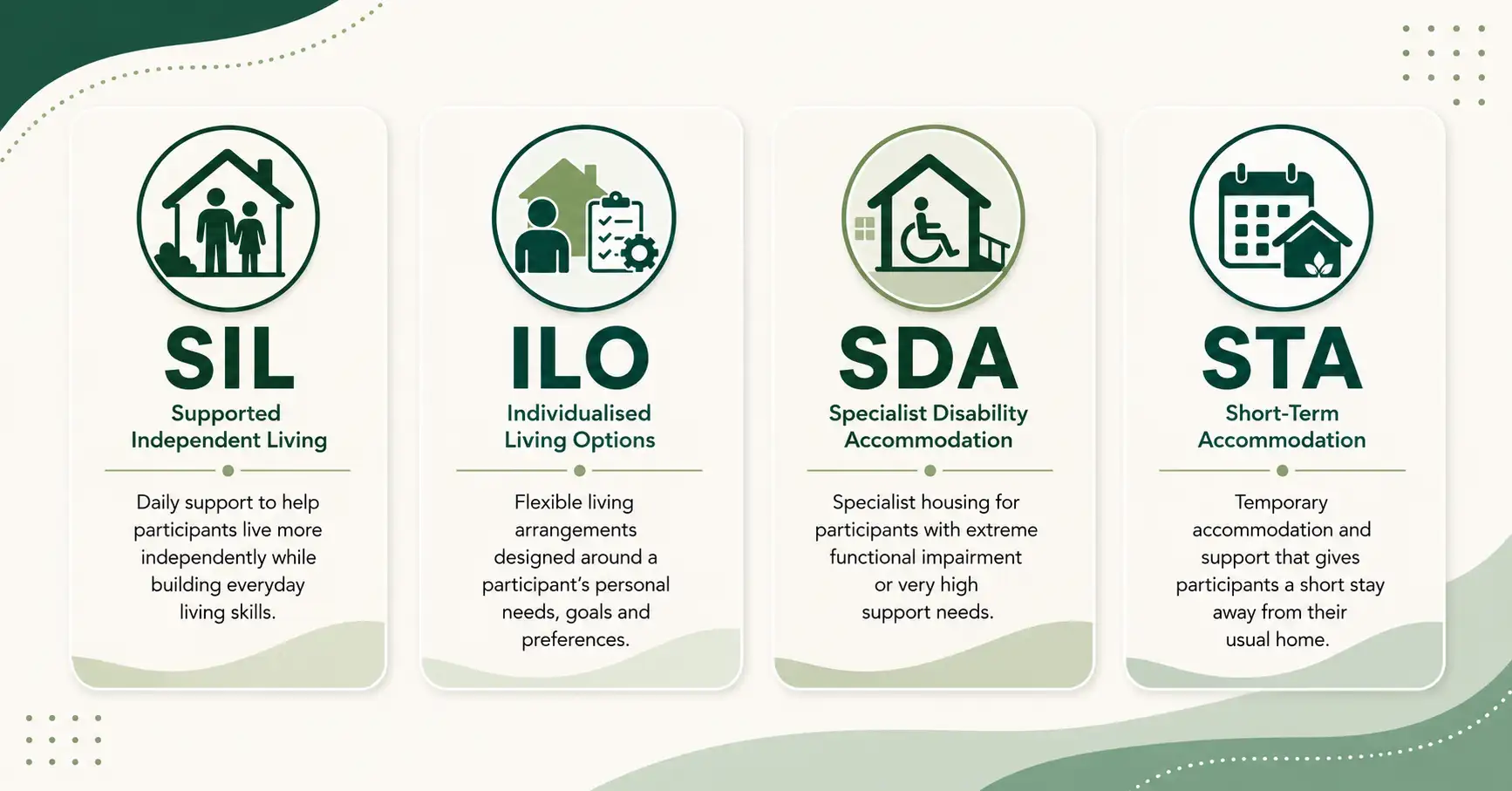
Supported Independent Living (SIL), Individualised Living Options (ILO),
Specialist Disability Accommodation (SDA), and Short-Term Accommodation (STA) are some of the major home and living support options funded by the NDIS.
What Can NDIS Home and Living Supports Include?
NDIS home and living supports can include different types of disability-related assistance, depending on a participant’s individual needs, goals, circumstances and approved NDIS plan.
Support may help a participant with:
- Personal care, such as showering and dressing
- Everyday tasks such as cooking, cleaning and laundry
- Developing skills to live more independently
- Assistive technology that makes tasks at home easier
- Home modifications that improve safety and accessibility
- Support to find and maintain suitable housing
The type and amount of support will be different for each participant. Some people may need targeted assistance with particular daily tasks, while others may require a more structured home and living arrangement.
It is also important to understand that NDIS Home and Living Support does not automatically mean that the NDIS pays for all housing and household expenses. The NDIS may fund eligible disability-related supports, while ordinary living costs are generally the participant’s responsibility.
How to Access NDIS Home and Living Support
NDIS participants and their families have the opportunity to talk about their goals related to home and living during their planning discussion. The first step to accessing NDIS home and living support options is to assess the participant’s specific needs. The participant needs to consider the level of assistance that they require for daily activities, their living situation, and any specialised home modifications needed to ensure their safety and comfort before arriving at a decision.
What Is an NDIS Home and Living Assessment?
When exploring NDIS Home and Living Support, participants may need to provide information and evidence about their disability-related support and housing needs.
The process starts with considering current and future needs, including:
- Daily activities where support is required
- How often and when assistance is needed
- The impact of disability on daily life and living arrangements
- Current informal, community and other supports
- Other home and living options already explored
The NDIS may require recent evidence from a relevant treating health professional. Depending on the participant’s circumstances, this may include a professional report or an assessment. For example, an occupational therapist may provide information about functional needs and how these affect everyday activities and housing requirements.
The purpose of this information is to help the NDIA understand the participant’s support needs and decide whether particular home and living supports can be included in the participant’s NDIS plan. The NDIA considers the information and evidence supplied and may request further information when needed.
Choosing the Right NDIS Home and Living Option
Home and Living Support Services at Aussie Life Care
Aussie Life Care understands the importance of home and living support options in empowering individuals with disabilities. Whether it is finding suitable Specialist Disability Accommodation (SDA), securing round-the-clock SIL support, or taking a break through Short-Term Accommodation (STA), we are here to help you navigate the process. Contact us
today to know more.
Frequently Asked Questions
The NDIS may fund eligible disability-related supports that help a participant live more independently. Depending on individual needs and the participant’s plan, this can include assistance with daily activities, assistive technology, home modifications and certain specialised home and living supports. Not every participant will be eligible for every option.
Generally, participants are responsible for ordinary day-to-day living costs such as rent, groceries, utilities, telephone and internet expenses. NDIS funding focuses on eligible disability-related supports rather than replacing normal household expenses.
Recent Posts
- Top 5 Benefits of Working With an NDIS Registered Provider
- SIL and Daily Living Activities: Tips for a Smooth Routine
- Community Integration in SDA: Connecting Beyond the Front Door
- Personalised Living Choices: How NDIS Supports Independence
- NDIS Core Supports Made Simple: How to Make Informed Choices

